
Small Gestures, Long Echoes (Kathy – Brussels – January 2026)
French version below – Nederlandse versie hieronder
At the start of this new year, I would like to extend my very best wishes.
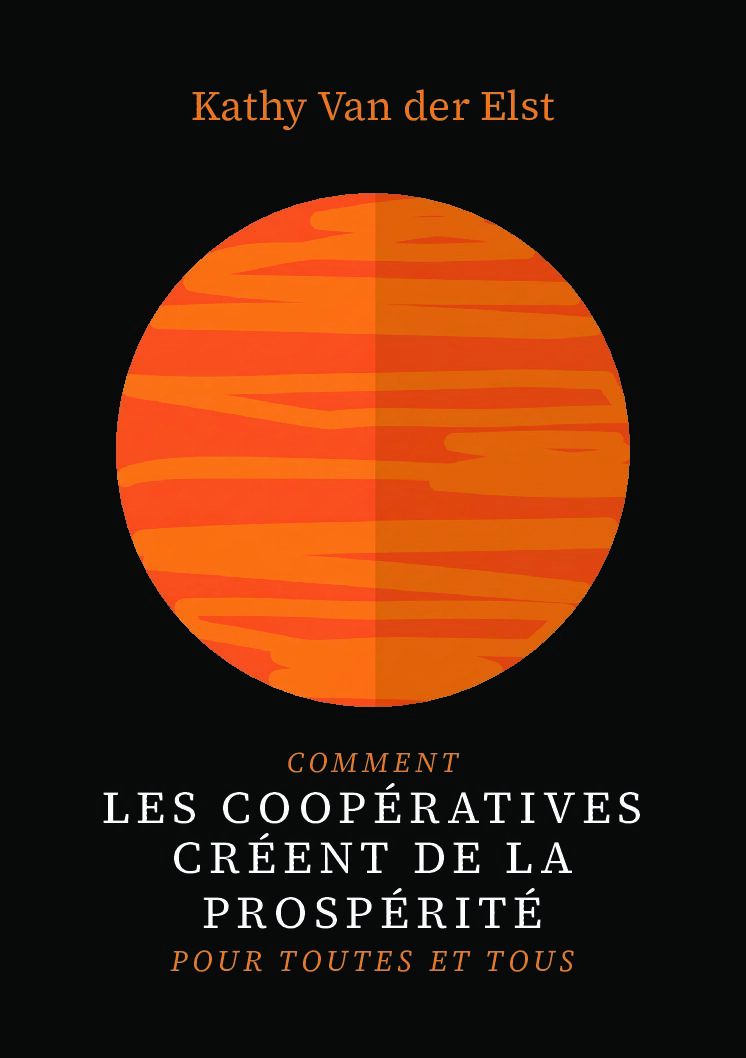
How Do Cooperatives Build Prosperity for All continues its journey.
Over the past month, the book has found its first readers.
It has been read, gifted, passed on.
And sometimes, it has accompanied — or confirmed — very concrete choices.
I have received messages that simply say:
“I’ve changed a few habits.”
That fills me with joy.
The book is now available in French (https://tally.so/r/wAZYal), Dutch (https://tally.so/r/m6ozbY) and English (https://tally.so/r/w20YRM).
I would be delighted to read your thoughts and impressions.
This book was never conceived as a final word, but as material for discussion.
From today onwards, I am launching a new short series on the blog:
the story behind the photographs chosen to illustrate the three editions. Each image was taken in India and tells a story.
————————————————————————
Bhopal, 6 December 2023
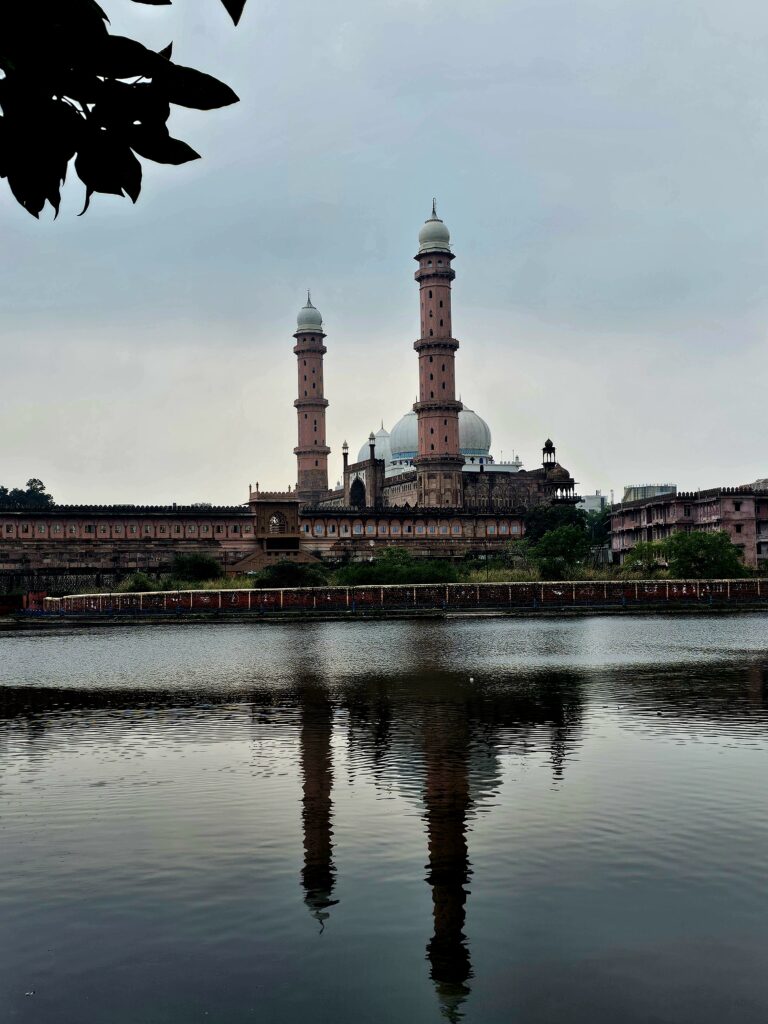
That day, I wanted to visit the great Taj-ul-Masajid mosque in Bhopal, the capital of Madhya Pradesh, in central India. This predominantly Muslim city is sadly known for the chemical disaster that struck in December 1984. It could just as well be known for its magnificent vast lake and its extraordinary museum of tribal art.
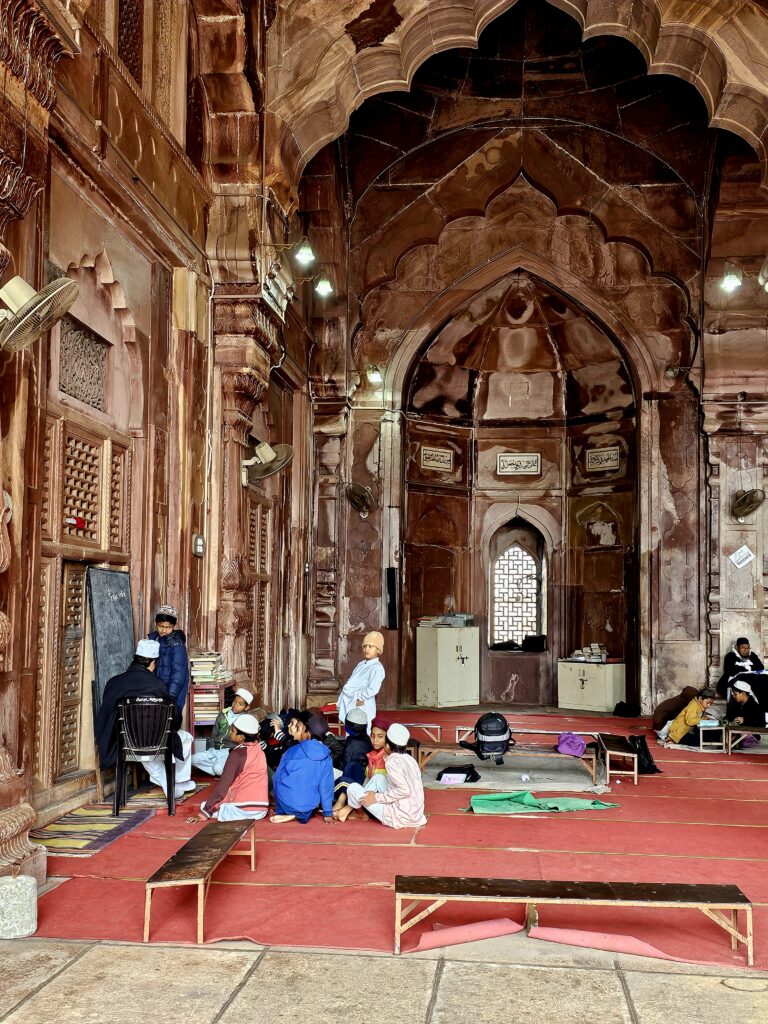
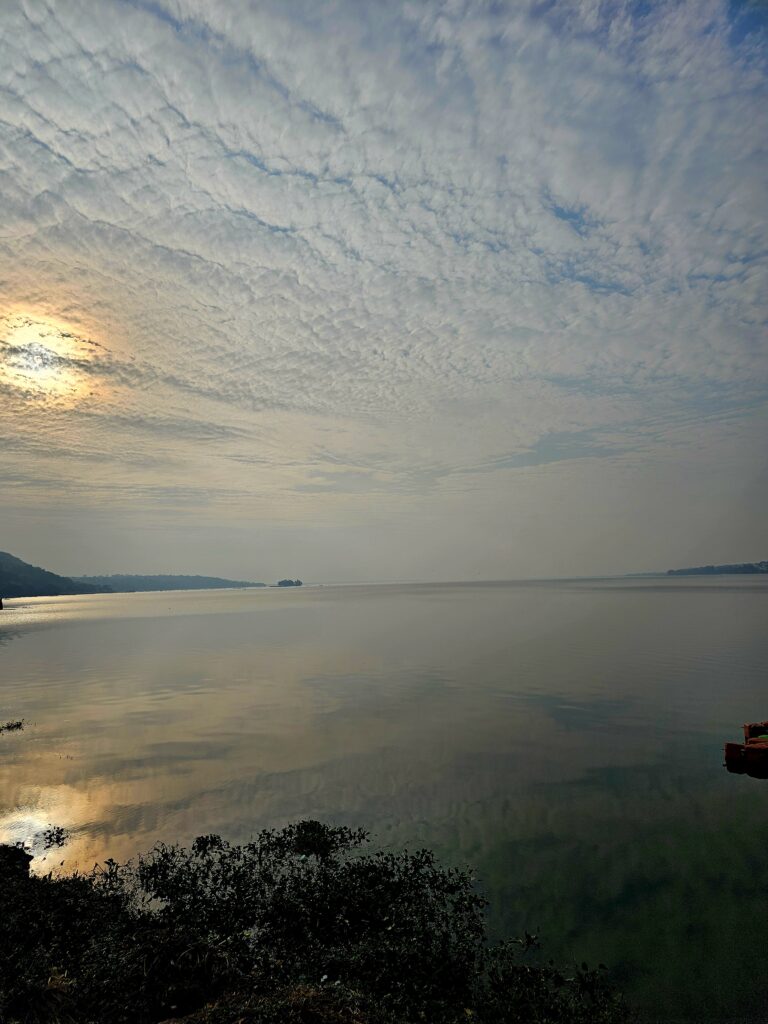
I love wandering through cities — getting lost, finding my way again, discovering, meeting people. Drawn to stretches of water and sunlight, I stroll on, having been captivated by the beauty and sobriety of the country’s largest mosque, whose name means “Crown among mosques”.
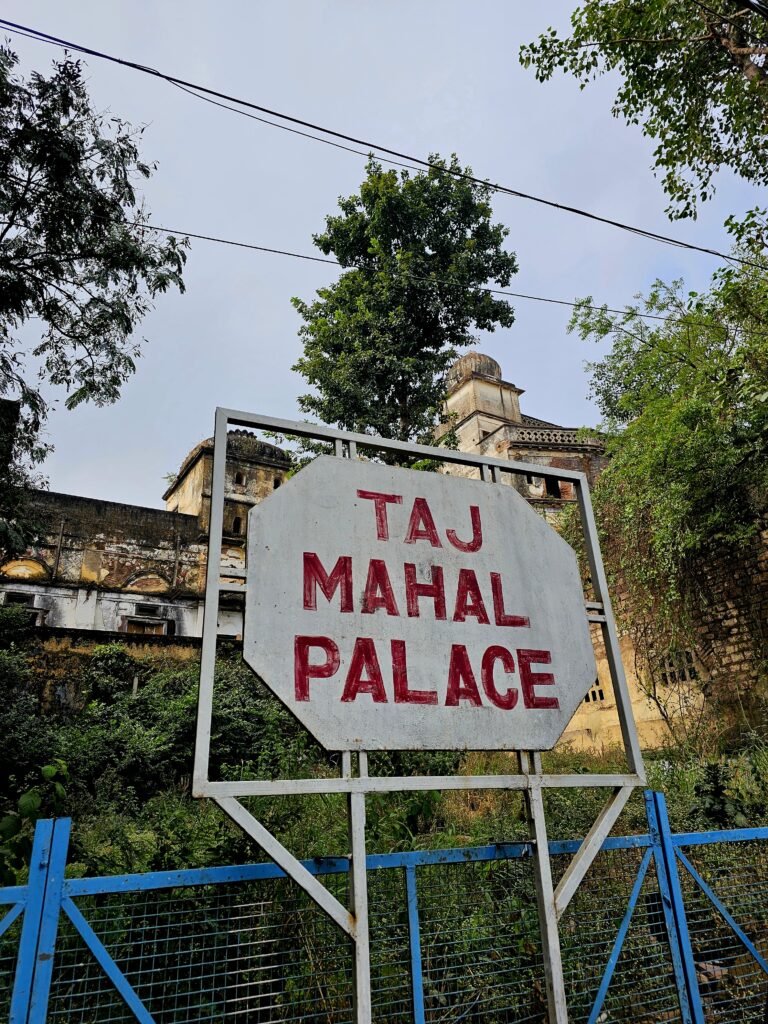
Suddenly, a small detail catches my eye: TAJ MAHAL PALACE.
A quick geographical and cultural check: the Taj Mahal is in Agra, some 550 kilometres to the north.
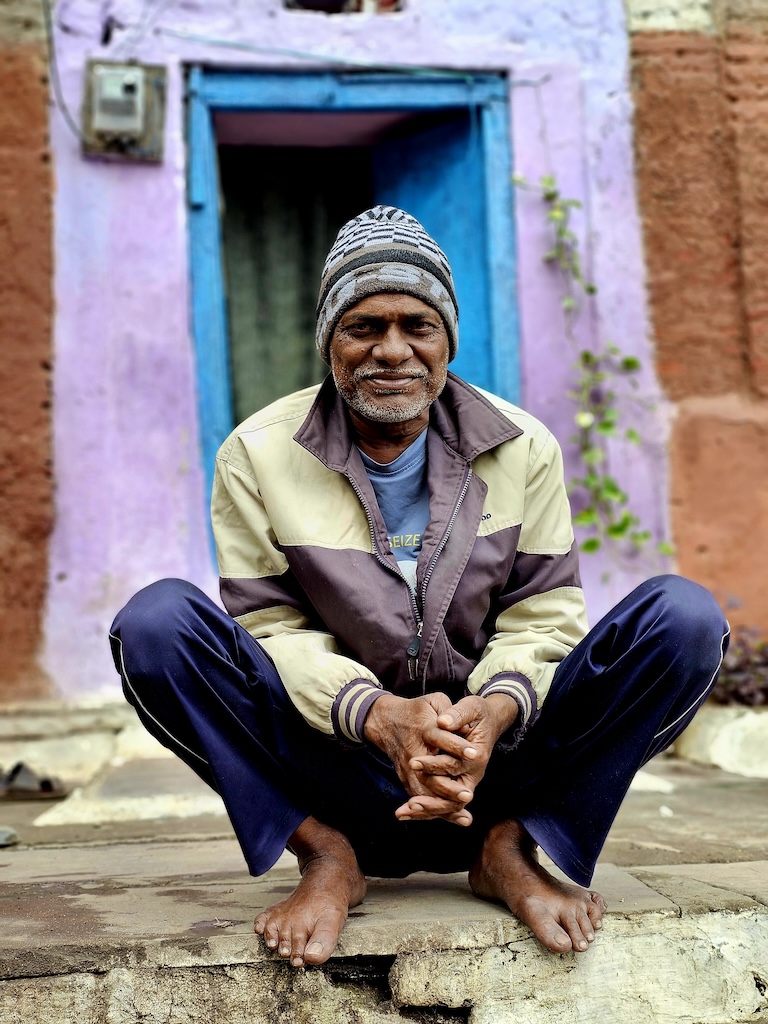
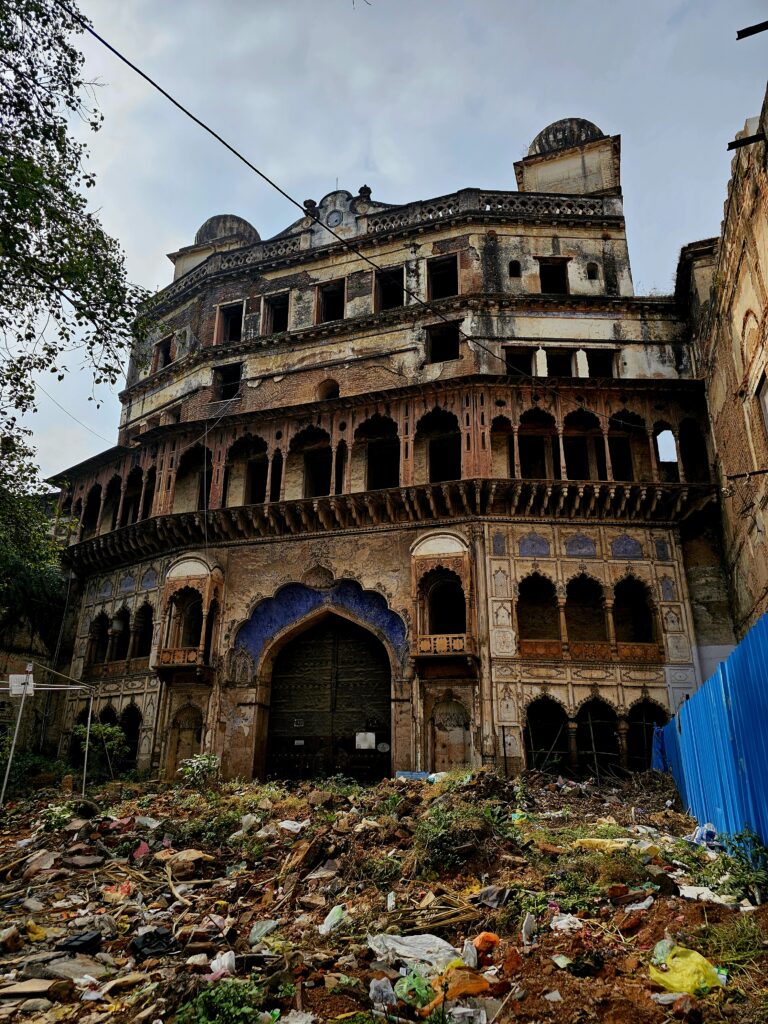
And behind that small detail, a palace being reclaimed by nature and damp. A splendid ruin whose avenue has become an organic dumping ground and the entrance to the very modest home of a man squatting outside, quietly contemplating life. He smiles at me, invites me to sit, and says nothing. We do not share a common language, yet we communicate through glances, in silence. Then, as so often in India, the curious arrive and ask where I am from, what I am doing there, whether I am married, whether I have children, whether I have already had my lunch…
I explain that I write articles about India, and in particular about the Indian Coffee Houses. Once again, the magic happens: discussions begin. Tea appears — hospitality obliges — and the gentle silence with “my gentleman” gives way to that exuberant joy I love just as much.
I did not yet know that I would begin writing a book about cooperatives exactly one year later. Arno — my brilliant editorial adviser — thought, without knowing the story behind it, that the photograph of this man would be perfect to welcome you into the Prologue. I am not disappointed by his choice. It is perfect.
And as a final note to the story, I later learned that the patron of this palace was the same as that of the mosque: the Begum family. Originally, the building was called Raj Mahal. The British, impressed by its architecture, suggested renaming it Taj Mahal, in reference to the one in Agra. The Begum family accepted the change.
Built between 1871 and 1884, the palace was one of the largest in the world at the time. After the partition of India in 1947, it temporarily housed Sindhi refugees, before gradually falling into disuse due to a lack of resources for its maintenance.
This history — British presence followed by independence — would play a decisive role in the development of many forms of collective organisation in India.
Including that of the Indian Coffee Houses.
En ce début d’année, je vous adresse mes meilleurs vœux.
Comment les coopératives créent de la prospérité pour toutes et tous poursuit sa route.
Ce dernier mois, le livre a trouvé ses premiers lecteur•ices.
Il a été lu, offert, partagé.
Et parfois, il a accompagné — ou confirmé — des choix très concrets.
J’ai reçu des messages qui disent simplement :
« J’ai changé certaines habitudes. ». Cela me comble de joie !
Le livre est désormais disponible en français (https://tally.so/r/wAZYal), néerlandais (https://tally.so/r/m6ozbY) et anglais (https://tally.so/r/w20YRM).
Je serais très heureuse de lire vos retours de lecture.
Ce livre n’a pas été pensé comme un point final, mais comme une matière à discussion.
Dès aujourd’hui, j’ouvre une nouvelle petite série sur le blog :
l’histoire des photos choisies pour illustrer les trois éditions. Chaque image a été prise en Inde et raconte une histoire.
————————————————————————
Bhopal, le 6 décembre 2023
Ce jour-là, je voulais visiter la grande mosquée Taj-ul-Masajid de Bhopal, la capitale du Madhya Pradesh, au centre de l’Inde. Cette ville à majorité musulmane est tristement célèbre pour la catastrophe chimique qui y a eu lieu en décembre 1984. Elle pourrait aussi l’être pour son magnifique lac géant et son musée d’art tribal hors du commun.
Je me balade volontiers dans les villes, je m’y perds, m’y retrouve, découvre et rencontre. Attirée par les étendues d’eau et le soleil, je déambule après avoir été charmée par la beauté et la sobriété de la plus grande mosquée du pays, dont le nom signifie « Couronne parmi les mosquées ».
Soudain, un petit détail m’interpelle : TAJ MAHAL PALACE.
Rapide check géographique et culturel : le Taj Mahal se trouve à Agra, à quelques 550 kilomètres au nord.
Et derrière le petit détail, un palais dévoré par la nature et par l’humidité. Une splendeur dont l’allée sert de dépotoir organique et d’entrée à la très modeste habitation de ce monsieur qui contemple la vie, accroupi devant chez lui. Il me sourit, m’invite à m’assoir et ne dit rien. Nous ne parlons aucune langue en commun mais nous communiquons du regard, en silence. Puis, comme souvent en Inde, les curieux•ses s’invitent et me demandent d’où je viens, ce que je fais là, si je suis mariée, si j’ai des enfants, si j’ai déjà pris mon lunch …..
Je leur explique que j’écris des articles sur l’Inde et en particulier sur les Indian Coffee Houses. Une fois de plus, la magie opère, les débats sont lancés. Du thé arrive — hospitalité oblige — et le doux silence avec “mon monsieur” disparaît pour faire place à cette joie exubérante que j’adore tout autant.
Je ne savais pas encore que j’allais entamer l’écriture d’un livre sur les coopératives pile-poil un an plus tard. Arno — mon génial conseiller éditorial— a pensé — sans en connaître l’histoire — que la photo de cet homme conviendrait très bien pour vous accueillir dans la lecture du Prologue. Je ne suis pas déçue par son choix. Il est parfait.
Et pour la petite histoire, j’ai appris plus tard que le commanditaire de ce palais était le même que celui de la mosquée : la famille Begum.
À l’origine, le bâtiment s’appelait Raj Mahal. Les Britanniques, impressionnés par l’architecture, ont suggéré de le rebaptiser Taj Mahal, en référence à celui d’Agra. La famille Begum accepta le changement de nom.
Construit entre 1871 et 1884, le palais fut l’un des plus vastes du monde à l’époque. Après la partition de l’Inde en 1947, il accueillit temporairement des réfugié·es sindhi, avant d’être progressivement abandonné, faute de moyens pour en assurer l’entretien.
Cette histoire — la présence britannique, puis l’indépendance — jouera un rôle décisif dans le développement de nombreuses formes d’organisation collective en Inde.
Dont celle des Indian Coffee Houses.
Aan het begin van dit nieuwe jaar wens ik jullie het allerbeste.
Coöperaties bouwen aan een betere wereld zet zijn traject voort.
De voorbije maand vond het zijn eerste lezers.
Het circuleerde. Werd doorgegeven. Cadeau gedaan.
En soms woog het mee — of gaf het de doorslag — bij zeer concrete beslissingen.
Ik kreeg berichten die niet meer zeggen dan:
“Ik heb een paar dingen anders aangepakt.”
Dat stemt me bijzonder gelukkig.
De publicatie is nu beschikbaar in het Frans (https://tally.so/r/wAZYal), het Nederlands (https://tally.so/r/m6ozbY) en het Engels (https://tally.so/r/w20YRM).
Ik lees graag wat het bij jullie losmaakt.
Dit project is niet opgevat als een eindpunt, maar als een uitnodiging tot gesprek.
Vanaf vandaag start op de blog een nieuwe korte reeks:
het verhaal achter de beelden die gekozen zijn voor de drie edities. Elke foto werd genomen in India en vertelt een verhaal.
————————————————————————
Bhopal, 6 december 2023
Die dag wilde ik de Taj-ul-Masajid bezoeken, de grote moskee van Bhopal, hoofdstad van Madhya Pradesh, in het hart van India. De stad is vooral bekend om de chemische ramp van december 1984. Ze zou evengoed herinnerd kunnen worden om haar uitgestrekte meer en haar uitzonderlijke museum voor tribale kunst.
Ik dwaal graag door steden. Ik raak er de weg kwijt, vind mezelf terug, ontdek en ontmoet. Aangetrokken door water en zon blijf ik rondlopen, nog onder de indruk van de schoonheid en soberheid van de grootste moskee van het land — wiens naam letterlijk “Kroon onder de moskeeën” betekent.
Dan valt mijn blik op een klein detail: TAJ MAHAL PALACE.
Snelle realiteitscheck: de Taj Mahal staat in Agra, zo’n 550 kilometer noordelijker.
Dat detail blijkt een paleis te zijn, langzaam teruggenomen door vocht en begroeiing. Een indrukwekkend gebouw waarvan de oprit is verworden tot een organisch stort en tegelijk de toegang vormt tot de uiterst eenvoudige woning van een man die gehurkt voor zijn huis zit en het leven gadeslaat. Hij glimlacht, nodigt me uit om te gaan zitten en zwijgt. We delen geen taal, maar verstaan elkaar — in stilte, via blikken. Zoals zo vaak in India blijven nieuwsgierigen niet uit. Ze willen weten waar ik vandaan kom, wat ik hier doe, of ik getrouwd ben, kinderen heb, al gegeten heb…
Ik vertel dat ik schrijf over India, en meer bepaald over de Indian Coffee Houses. Opnieuw gebeurt het: gesprekken komen op gang, meningen kruisen elkaar. Er verschijnt thee — vanzelfsprekend — en de rustige stilte met “mijn man” maakt plaats voor een uitbundigheid die ik evenzeer koester.
Ik wist toen nog niet dat ik exact een jaar later zou beginnen aan het schrijven van een boek over coöperaties. Arno — mijn redactioneel adviseur — koos, zonder het verhaal achter de foto te kennen, dit beeld om de lezer te verwelkomen in de proloog. Zijn intuïtie zat juist. Het klopt.
Later ontdekte ik dat de opdrachtgever van dit paleis dezelfde was als die van de moskee: de familie Begum. Oorspronkelijk heette het gebouw Raj Mahal. De Britten, onder de indruk van de architectuur, stelden voor het te hernoemen tot Taj Mahal, als verwijzing naar dat van Agra. De familie stemde toe.
Het paleis werd gebouwd tussen 1871 en 1884 en gold toen als een van de grootste ter wereld. Na de onafhankelijkheid van India in 1947 bood het tijdelijk onderdak aan Sindhi-vluchtelingen, om daarna geleidelijk te worden verlaten, bij gebrek aan middelen.
Die geschiedenis — eerst de Britse aanwezigheid, daarna de onafhankelijkheid — speelde een bepalende rol in het ontstaan en de ontwikkeling van uiteenlopende coöperatieve en collectieve organisatievormen in India.
Waaronder de Indian Coffee Houses.


2 Comments
Ergun KUTLU
I have your book and I’m reading it. I know it reflects your many years of experience in India and as a member of Smart Coop in Belgium. Every page, every photo tells a story and conveys reallife experience, which makes it very practical and real, emerging from life, and therefore very valuable . So does your blogs here. Thank you for sharing your knowledge and experience via your book, blogs, photos, and other work. Thank you Kathy
Kathy Van der Elst
Thank you so much, Ergün. You were a very valuable member of the team on board of this adventure. Accept all my gratitude!